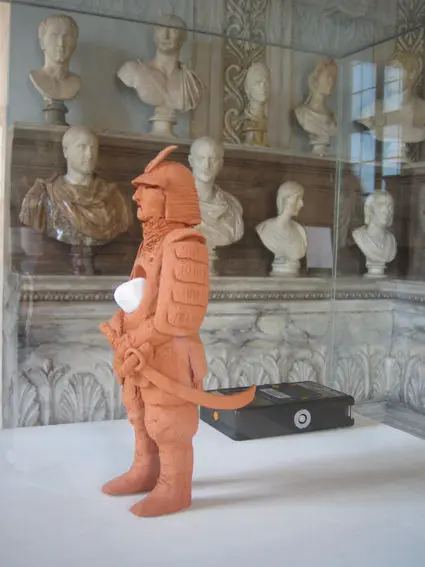
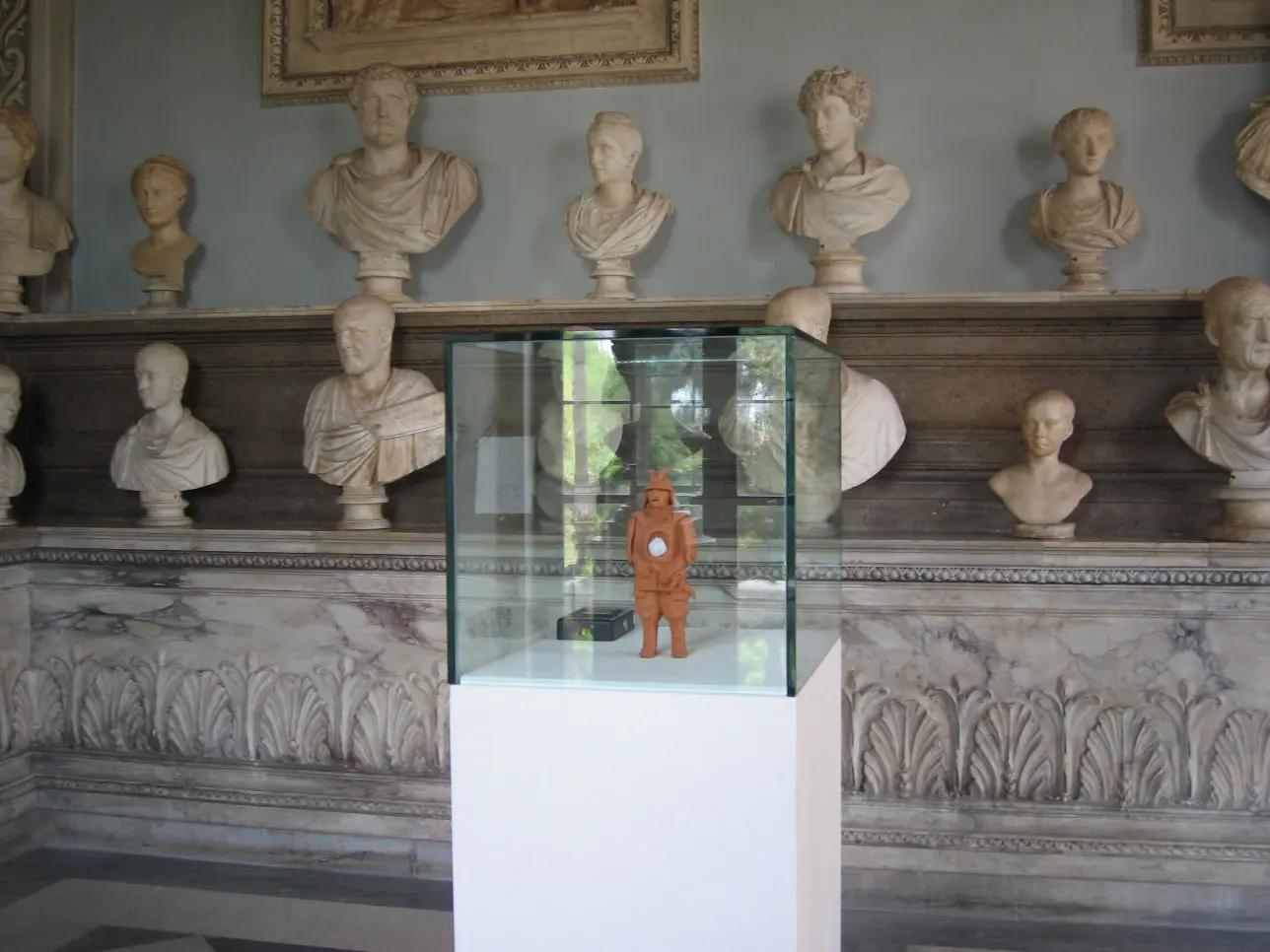
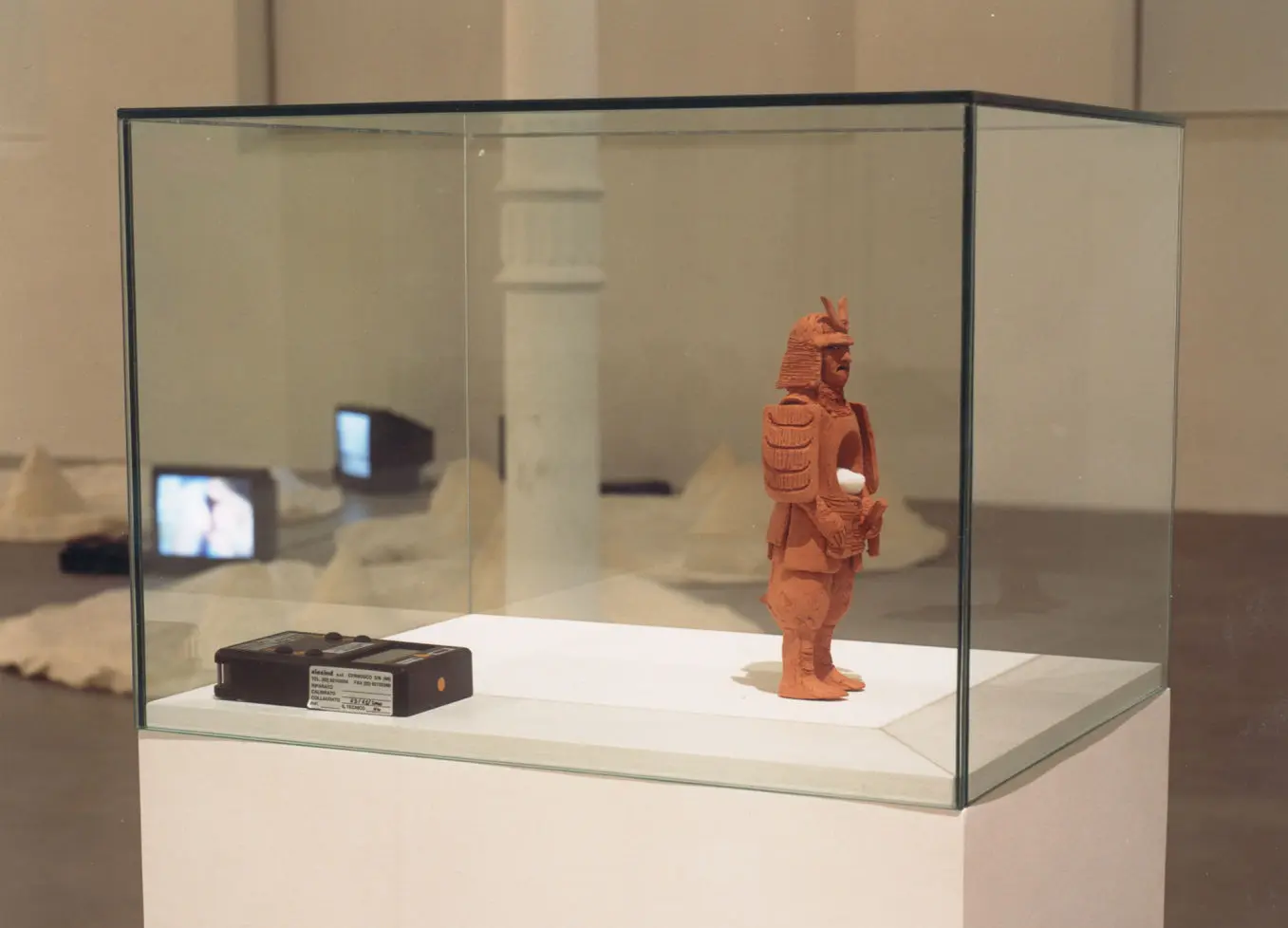
Untitled, 2000
terracotta sculpture, potassium, geiger meter
Interview by Costantino D’Orazio in Il premio per la giovane arte italiana del centro nazionale per le arti contemporanee, Ed. Allemandi, Torino, 2001.
A small terracotta statue the size of an ex-voto stands firm and immobile, o protected by a screen. It meets the public at the entrance of the museum with a gaze that is anything but conciliatory. Next to the statue but also under the screen is a metre emits an irritating sound. What does this statue represent?
This is a samurai warrior. I wanted to represent a warrior and the samurai e are undoubtedly the most powerful warriors ever to have existed. I decided to make it small to make it precious and sacred.
There is a white substance in the stomach of the samurai. What is it?
The substance in the stomach is potassium 40, which at a first glance looks like salt but which is in fact highly radioactive. It produces beta-gamma rays.
Why did you place it there?
The samurai believed the stomach to be the seat of the soul. This is why the Harakiri ritual entails cutting the stomach. In this way warriors ended the life of the soul directly and died honourably.
A meter records the presence of radioactivity by emitting a worrying sound. Where did your idea of frightening the public by creating a danger stem from?
Actually this is the first time I have created a dangerous situation for the public. The danger is not real, however, but more on a psychological level. Our bodies contain potassium... 1 am interested in giving intensity to a small object. The radioactive degeneration confers perpetual movement to the samurai, even though we can not perceive this visually.

Offline Website Builder